






In todays business environment, quality is no longer a competitive advantage; it is a necessity. Customers, investors, and global buyers increasingly expect businesses to deliver high-quality products while maintaining environmentally responsible practices.

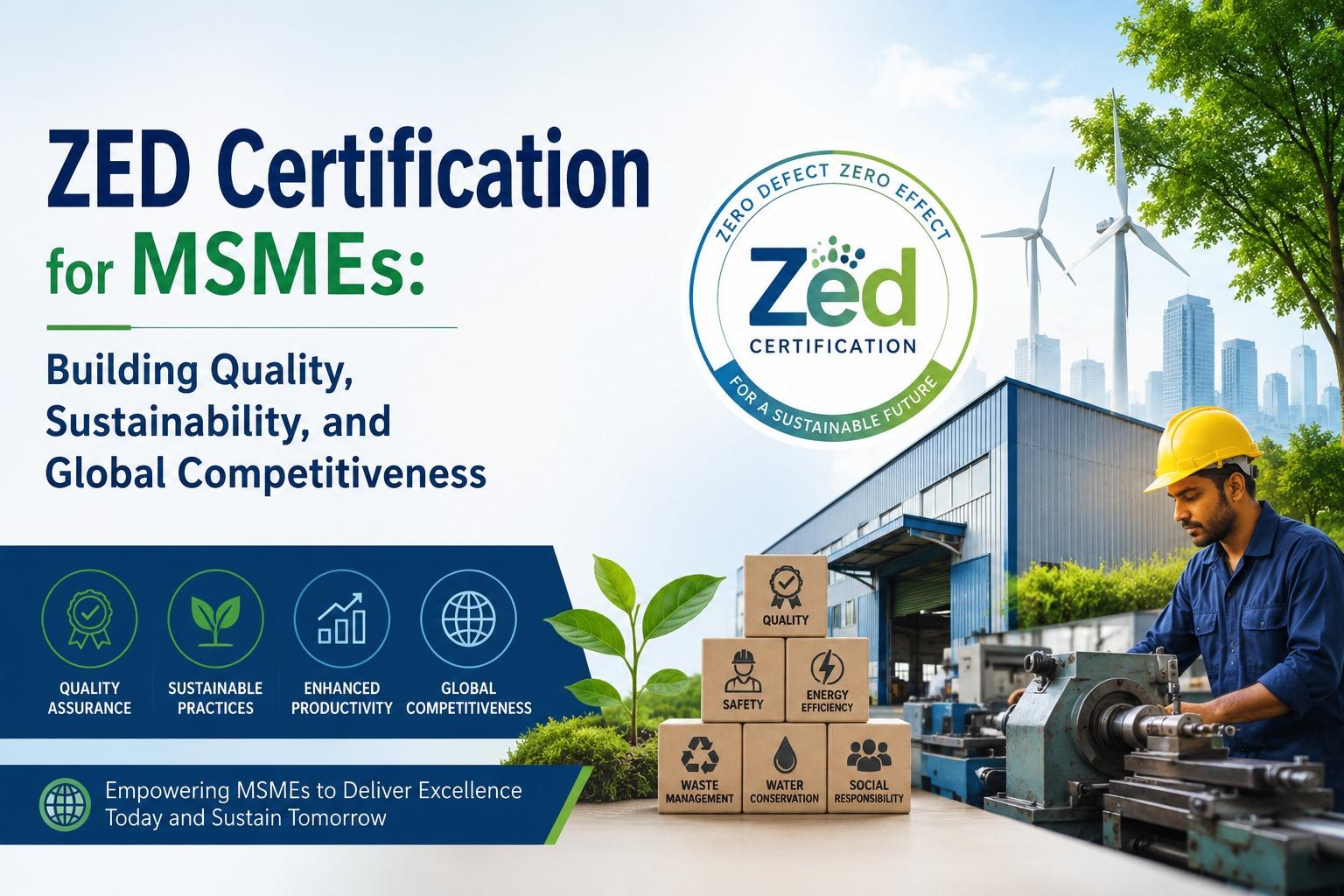
ZED Certification for MSMEs: Building Quality, Sustainability, and Global Competitiveness
In todays business environment, quality is no longer a competitive advantage; it is a necessity. Customers, investors, and global buyers increasingly expect businesses to deliver high-quality products while maintaining environmentally responsible practices.
For Micro, Small, and Medium Enterprises (MSMEs), meeting these expectations can open doors to new markets, stronger customer trust, and long-term business growth.
Recognising this need, the Government of India introduced the ZED (Zero Defect Zero Effect) Certification Scheme, a transformative initiative designed to help MSMEs improve quality standards, reduce waste, adopt sustainable manufacturing practices, and enhance global competitiveness.
What is ZED Certification?
ZED stands for Zero Defect Zero Effect. It is a quality certification programme launched by the Ministry of MSME with the vision of creating manufacturing enterprises that produce high-quality products while minimising their environmental impact.
The certification encourages MSMEs to adopt best manufacturing practices that improve operational efficiency, enhance product quality, reduce wastage, and promote environmentally responsible production. It serves as a structured framework for continuous improvement and business excellence.
The concept of ZED is built around two fundamental principles that help enterprises become more competitive, efficient, and future-ready.
Zero Defect
The Zero Defect principle focuses on manufacturing products with the highest standards of quality, reliability, and consistency. It encourages enterprises to minimise production defects, improve quality control systems, and continuously enhance manufacturing processes to increase customer satisfaction.
Zero Effect
The Zero Effect principle emphasises environmentally responsible manufacturing practices. It encourages MSMEs to minimise their environmental footprint through efficient utilisation of resources, reduction of waste, energy conservation, pollution control, and adoption of sustainable production methods.
Together, these two principles help MSMEs build a culture of quality, sustainability, innovation, and operational excellence while preparing them to compete successfully in domestic as well as international markets.
Why is ZED Certification Important for MSMEs?
As markets become increasingly competitive, businesses must demonstrate quality, efficiency, and sustainability to remain relevant. Customers today expect products that meet high-quality standards while being manufactured through environmentally responsible processes.
ZED Certification provides a structured framework that helps MSMEs strengthen operational performance while aligning with national and global quality standards. Rather than being just a certification, ZED serves as a roadmap for continuous improvement, enabling enterprises to enhance productivity, build customer confidence, and achieve long-term business excellence.
Key Benefits of ZED Certification
Improved Product Quality
Consistent product quality is one of the most important factors influencing customer satisfaction and brand reputation. ZED Certification encourages enterprises to adopt robust quality management practices that reduce defects, improve manufacturing processes, and enhance product reliability.
By implementing systematic quality controls and continuous improvement practices, MSMEs can produce products that consistently meet customer expectations, resulting in stronger customer trust and increased repeat business.
Reduced Costs Through Better Efficiency
Many MSMEs lose valuable resources due to process inefficiencies, material wastage, and operational gaps. The ZED framework promotes efficient utilisation of raw materials, energy, equipment, and manpower, helping enterprises optimise production processes while minimising waste.
Improved operational efficiency leads to lower production costs, better resource management, and increased profitability without requiring significant expansion in production capacity.
Stronger Environmental Responsibility
Sustainability has become an essential requirement across industries and global supply chains. ZED-certified enterprises are encouraged to adopt environmentally responsible practices such as waste management, pollution reduction, efficient energy utilisation, and sustainable manufacturing techniques.
These initiatives not only contribute towards environmental conservation but also improve long-term business resilience by helping enterprises comply with evolving environmental regulations and market expectations.
Increased Export Opportunities
International buyers increasingly prefer suppliers that follow recognised quality and sustainability standards. ZED Certification enhances the credibility of MSMEs by demonstrating their commitment to quality manufacturing and responsible business practices.
For enterprises looking to expand into domestic and international markets, certification provides a significant competitive advantage and improves opportunities to participate in global supply chains.
Enhanced Brand Value and Market Recognition
A recognised quality certification sends a strong signal to customers, investors, financial institutions, and business partners. ZED Certification helps MSMEs differentiate themselves in competitive markets while strengthening brand credibility and professional reputation.
This enhanced market recognition contributes to improved customer acquisition, stronger business partnerships, greater investor confidence, and long-term business growth.
Access to Government Support
Certified MSMEs may benefit from various government support programmes, incentives, and initiatives designed to promote quality manufacturing, sustainability, and technological advancement.
These benefits encourage enterprises to invest in continuous improvement, modernisation, innovation, and sustainable business practices, ultimately strengthening their competitiveness and long-term growth potential.
How ZED Certification Supports Business Growth
Many MSMEs struggle to scale their businesses because of inconsistent product quality, outdated manufacturing processes, and limited adoption of modern technologies. These challenges often affect productivity, profitability, and competitiveness in both domestic and international markets.
ZED Certification addresses these challenges by providing a structured framework that encourages enterprises to continuously improve their manufacturing systems, operational efficiency, and quality standards.
By implementing the principles of Zero Defect and Zero Effect, MSMEs can build stronger operational capabilities while preparing themselves for long-term sustainable growth.
ZED Certification encourages enterprises to:
- Improve operational efficiency
- Strengthen quality control systems
- Reduce wastage and production losses
- Adopt modern technologies
- Enhance workforce productivity
- Improve sustainability performance
Together, these improvements create a stronger foundation for business growth, improved competitiveness, higher customer satisfaction, and increased profitability.
Why ZED Certification Matters More Than Ever
The manufacturing landscape is evolving rapidly. Businesses are expected not only to deliver superior quality products but also to operate responsibly and sustainably. As industries embrace digital transformation and environmentally responsible manufacturing, quality certifications have become increasingly important for long-term success.
Rising Global Competition
Todays businesses compete not only with local manufacturers but also with national and international brands. Customers have more choices than ever before, making quality, consistency, and reliability critical differentiators.
ZED Certification enables MSMEs to strengthen these capabilities and remain competitive in an increasingly global marketplace.
Growing Consumer Expectations
Modern consumers are becoming increasingly aware of product quality, safety, and environmental responsibility. They prefer businesses that demonstrate a commitment to responsible manufacturing practices and continuous quality improvement.
By adopting the ZED framework, MSMEs can build greater customer trust while enhancing their reputation in the marketplace.
Sustainability as a Business Requirement
Environmental responsibility is no longer optional. Governments, investors, customers, and global supply chain partners increasingly expect businesses to minimise their environmental footprint through sustainable manufacturing practices.
ZED Certification encourages MSMEs to adopt environmentally responsible processes that improve resource efficiency, reduce waste, conserve energy, and support long-term sustainability goals.
Future-Ready Manufacturing
As industries continue moving toward smarter, cleaner, and more technology-driven manufacturing systems, MSMEs must adapt to remain competitive.
ZED Certification helps enterprises prepare for future market demands by promoting innovation, process improvement, quality excellence, and sustainable manufacturing practices that support long-term business success.
ZED Certification and the Vision of a Competitive India
Indias MSME sector plays a crucial role in employment generation, innovation, exports, and overall economic development. As the backbone of the nations industrial ecosystem, MSMEs contribute significantly to manufacturing output while creating opportunities for entrepreneurship and inclusive growth.
National initiatives such as Make in India, Digital India, and Atmanirbhar Bharat emphasise the importance of building globally competitive enterprises capable of delivering world-class products and services.
ZED Certification aligns closely with these national priorities by promoting quality-driven manufacturing, sustainable business practices, technological advancement, and continuous process improvement among MSMEs.
By helping enterprises improve operational efficiency, enhance product quality, minimise environmental impact, and adopt globally accepted manufacturing standards, the certification contributes towards building a stronger, more competitive, and future-ready industrial ecosystem for India.
Conclusion
ZED Certification is more than a quality certification—it is a strategic framework for business excellence that empowers MSMEs to achieve sustainable growth and long-term competitiveness.
By embracing the principles of Zero Defect and Zero Effect, enterprises can improve product quality, reduce operational costs, optimise resource utilisation, strengthen environmental responsibility, and enhance their credibility in both domestic and international markets.
As customer expectations, regulatory requirements, and global competition continue to evolve, businesses that invest in quality, innovation, and sustainability will be better positioned for long-term success.
For MSMEs looking to improve operational performance, expand market access, strengthen customer trust, and build future-ready enterprises, ZED Certification represents an important step towards achieving business excellence and global recognition.
By adopting internationally recognised quality standards and environmentally responsible manufacturing practices, MSMEs can unlock new opportunities, enhance competitiveness, and contribute meaningfully to Indias vision of becoming a globally competitive manufacturing hub.